

Coca-Cola
Brand Innovation
Redesigning and rebuilding a corporate website for performance, clarity, and scale.
- Client
- Coca-Cola
- Category
- Software Development
- Engagement
- Brand Innovation
- Role
- Strategy, Design & Build
The challenge
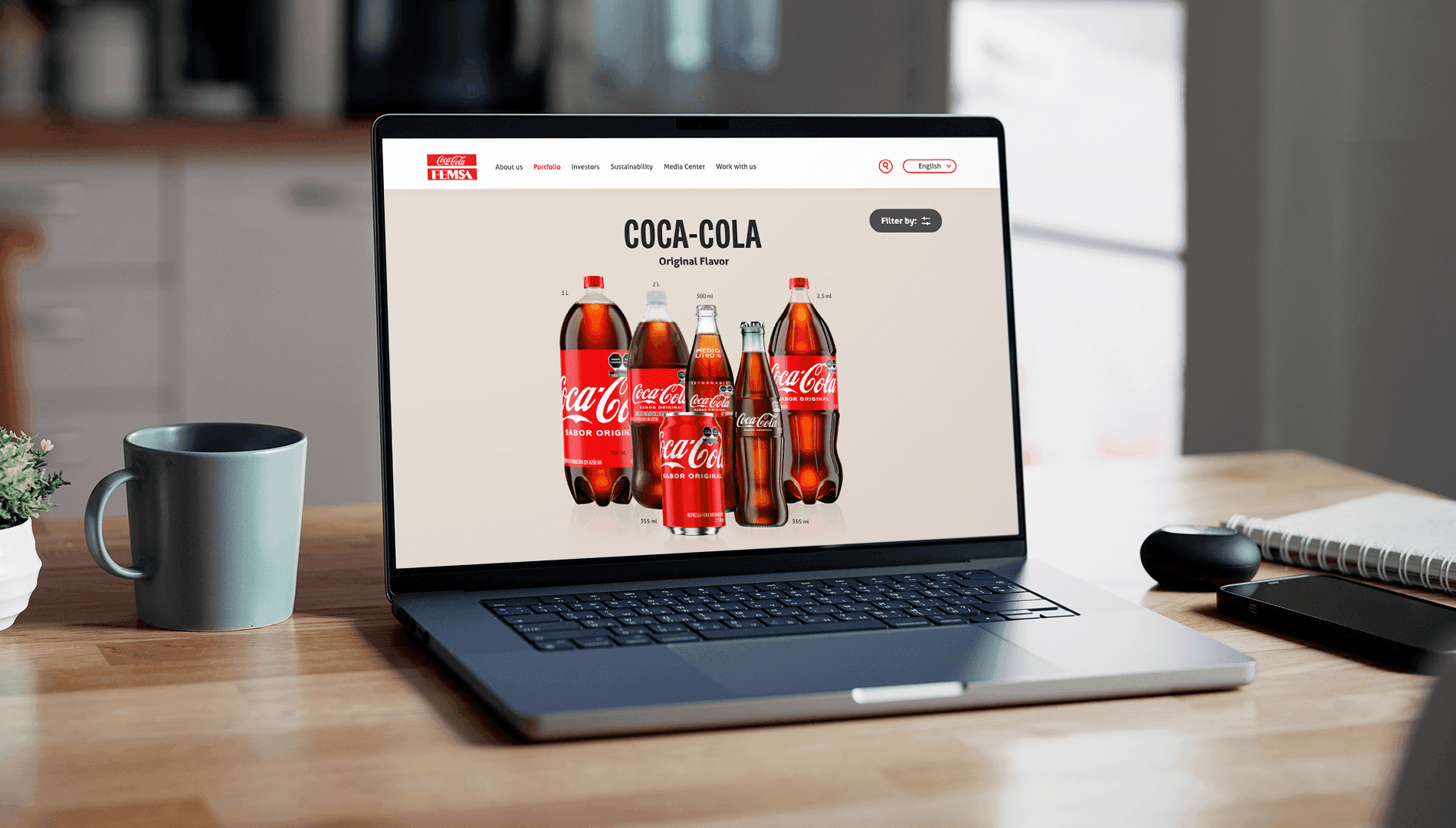
Coca-Cola FEMSA needed a real overhaul of its corporate site. The old one was rigid, weak on SEO, and painful to use once content volume got high. The goal was a digital experience that matched Coca-Cola's scale and gave internal teams a CMS they could actually work with.
The approach
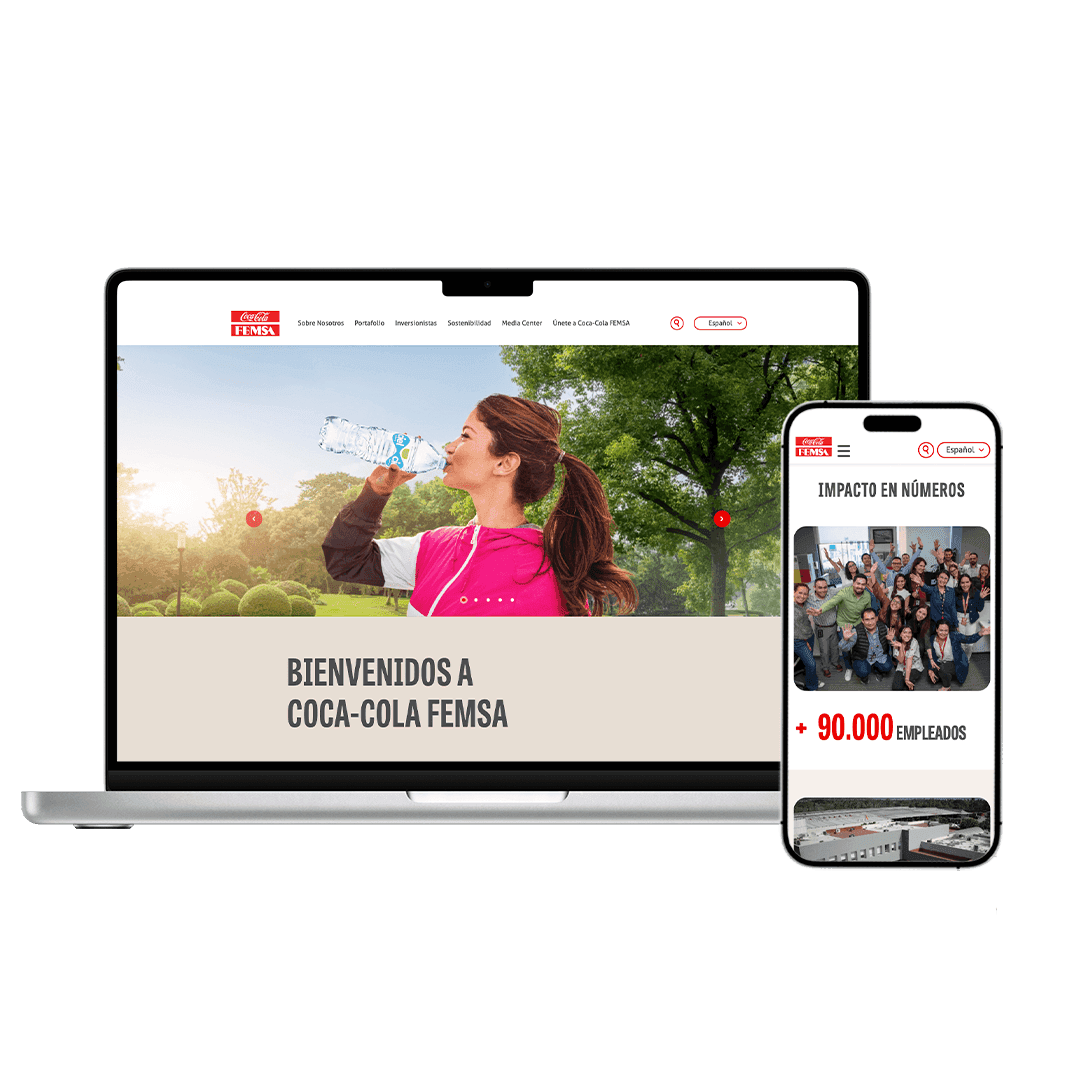
UX/UI Built for the Business
We designed the site from the ground up around UX and UI best practices. Navigation got simpler so usability, discovery, and accessibility came first. The visuals lined up with Coca-Cola's brand identity to make the experience consistent for global users and investors alike.
The solution
MODX, SEO, and Admin Flexibility
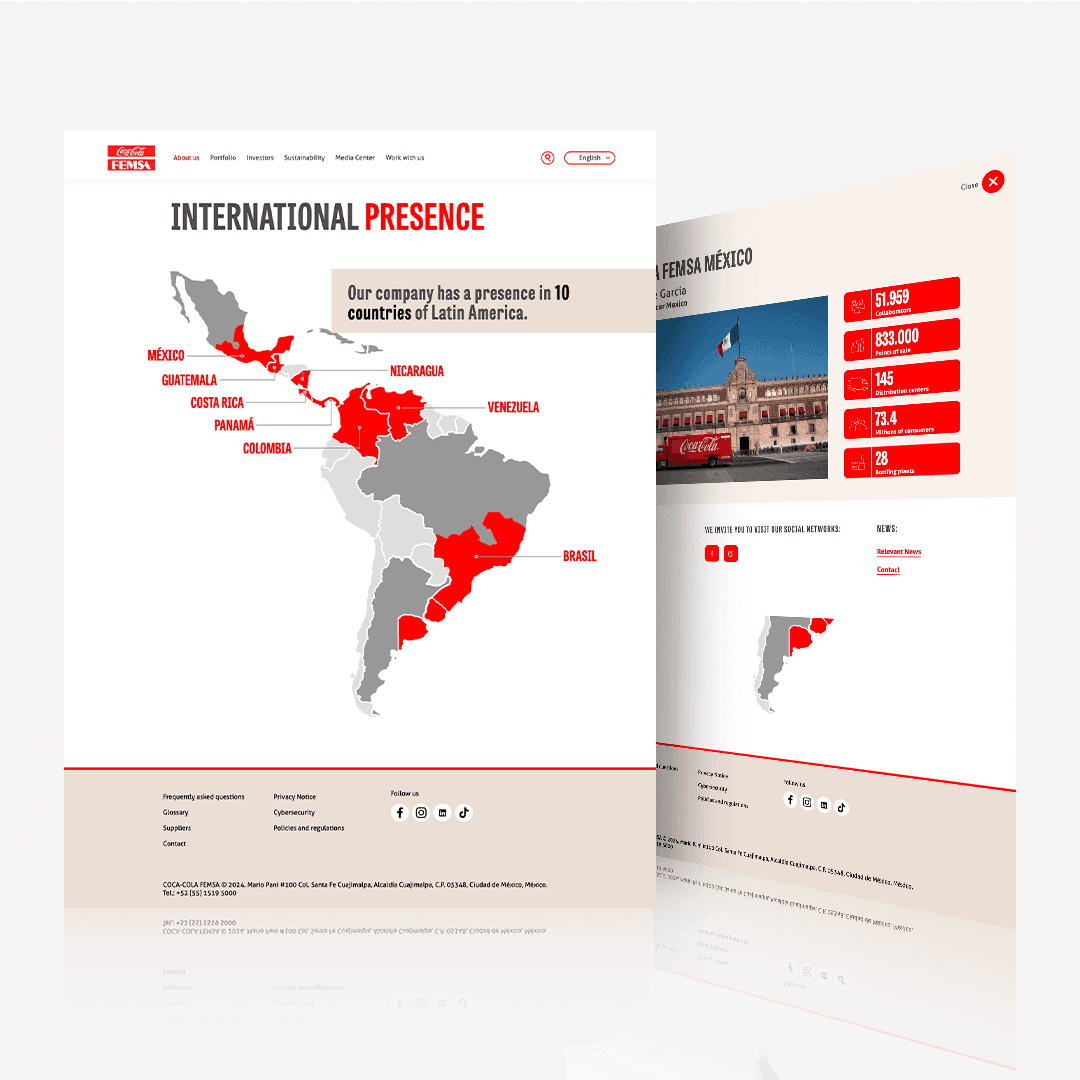
We built on MODX, a CMS that's powerful without being complicated. Internal teams got full control of content, pages, and future growth. SEO was baked in from semantic structure through performance and metadata.
The impact
- 01
Full redesign following UX/UI best practices
- 02
Optimized for SEO and mobile
- 03
Built on MODX for flexible, client-friendly content management
Corporate websites need to serve multiple stakeholders while holding brand consistency and performance. Our work with Coca-Cola shows how thoughtful UX strategy and the right technical foundation can turn a complex corporate site into an intuitive, scalable digital asset.
Pablo Hernandéz O'Hagan
CEO, Ingenia
Discovery to Launch
1. Discovery. We ran workshops with corporate comms, investor relations, and sustainability teams. Out of that came a clear content hierarchy, so the site could actually serve the range of people it needed to: media, job seekers, shareholders.
2. Design and development. Clean layouts, intuitive navigation, mobile-first. Development followed SEO and performance best practices so the site would be fast and discoverable. MODX gave Coca-Cola the autonomy to keep updating and evolving it.
3. Launch and enablement. After heavy QA, the site went live. We wrote documentation and ran training so the internal team could manage and grow the platform on their own from day one.